
Hamdi Bouzidi
Sales taught me where businesses break. Engineering lets me fix them.
I study how a business actually operates, find the point where the process breaks down, and build the software and AI systems that fix it. Based in Montreal. The projects in Proof of Work are real systems built for real operations, in leasing, hiring, and document handling.
Most operational bottlenecks look identical once you've traced enough of them, the difference is whether someone actually builds the fix.
Track Record
Range
Placing tenants across a portfolio of residential buildings, building the systems behind a high-volume leasing practice.
Sold construction service rentals into industrial accounts, translating operational cost data into ROI.
Door-to-door direct consumer sales, cold approaches with no scripted opening and no pipeline to fall back on.
Scouted and developed emerging musical talent for artist development.
Advised an early-stage startup on applied AI strategy, for the experience of solving a real problem outside my industry.
An independent music project, ongoing since before any of the above.
Languages
Three native languages means zero lag between what a client means and what I hear. It's how I've closed deals across Quebec's diverse market and with international, executive-level stakeholders, in whichever language the room is actually thinking in.
Proof of Work
Doc Chaser
Designed and deployed for UnitUp, a residential leasing agency in Montreal.
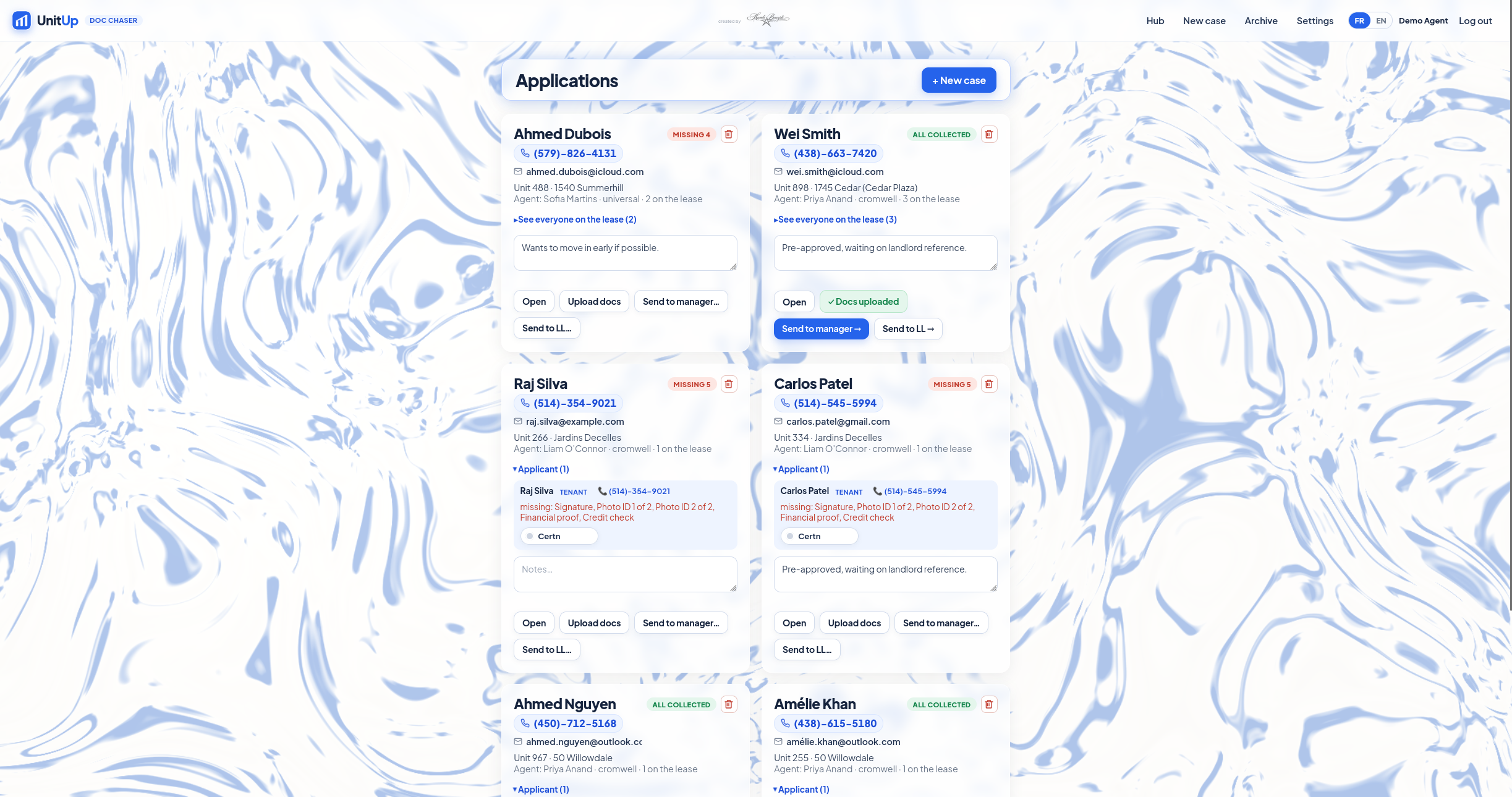
The slowest part of closing a lease isn't the visit, it's everything after. An agent emails a document checklist and waits days for scattered replies, while the client has time to keep browsing other units and talk themselves out of the one they just saw.
Every building requires one of three different legal rental-application forms, and every applicant or guarantor on a lease needs their own filled copy. Selecting the right form, filling it correctly, and organizing the resulting files was manual work an agent repeated after every single visit.
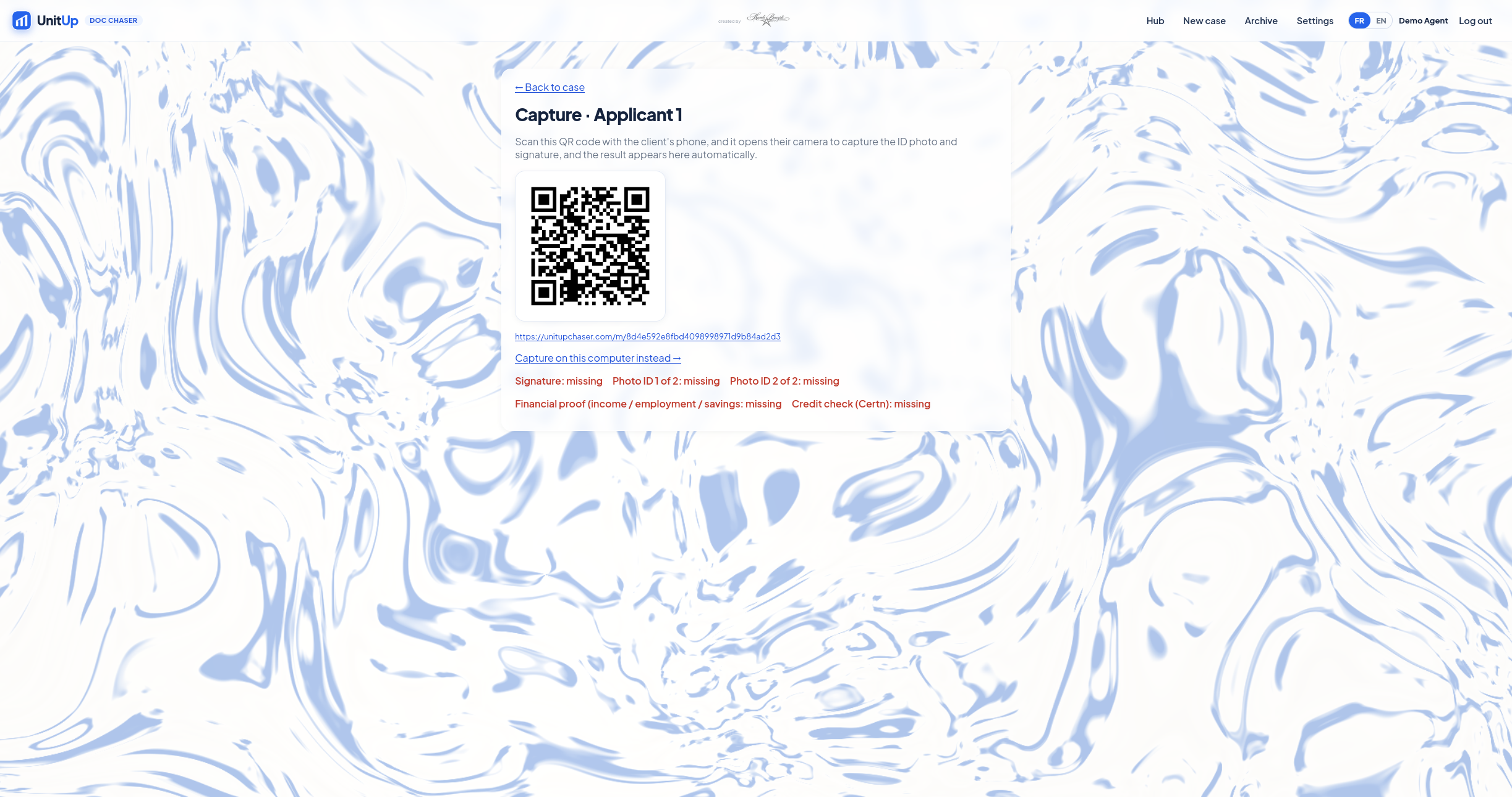
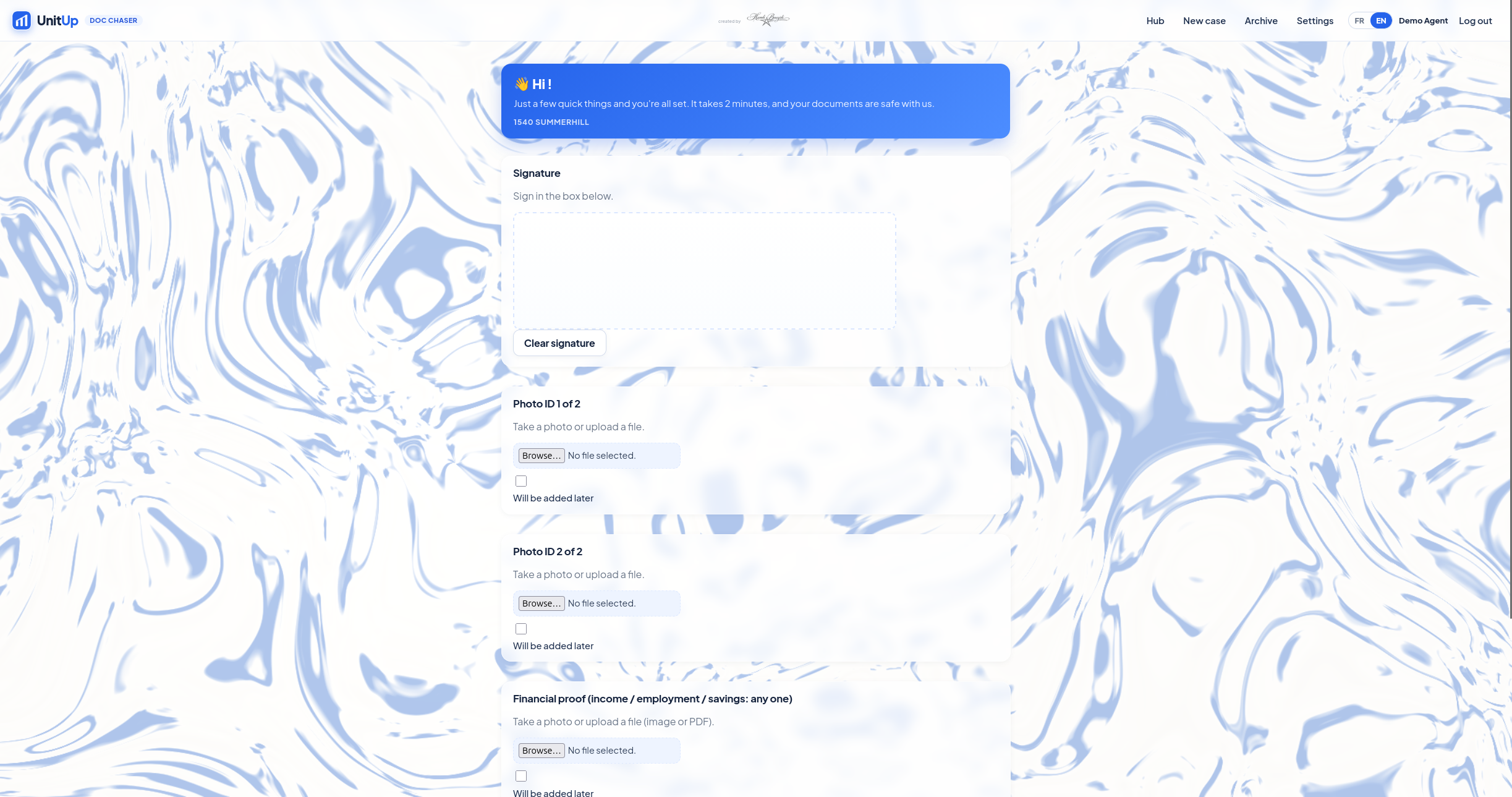
A tablet/phone-first web app that captures a client's info, ID, and signature on the spot (a QR-code handoff covers the desktop case, since a PC has no camera), auto-detects which legal form the building requires, fills it, creates a named Google Drive folder, and emails the client anything that couldn't be collected in person.
What used to be a multi-day email chase becomes a same-visit close. The client finishes cleanly while the decision still feels good, instead of sitting with an unfinished application and enough time to change their mind.
Python, Flask, Google Drive/Docs/Gmail APIs, automated PDF form-filling, deployed and running in production on its own VPS and domain.

RecruiterAI
A hiring manager isn't judged on how fast they screen candidates, they're judged on whether the person they picked actually works out. A resume alone doesn't show that.
Existing screening tools either rank candidates behind an opaque score, or leave the manager to imagine unaided how someone will actually perform. Neither gives a defensible basis for the decision.
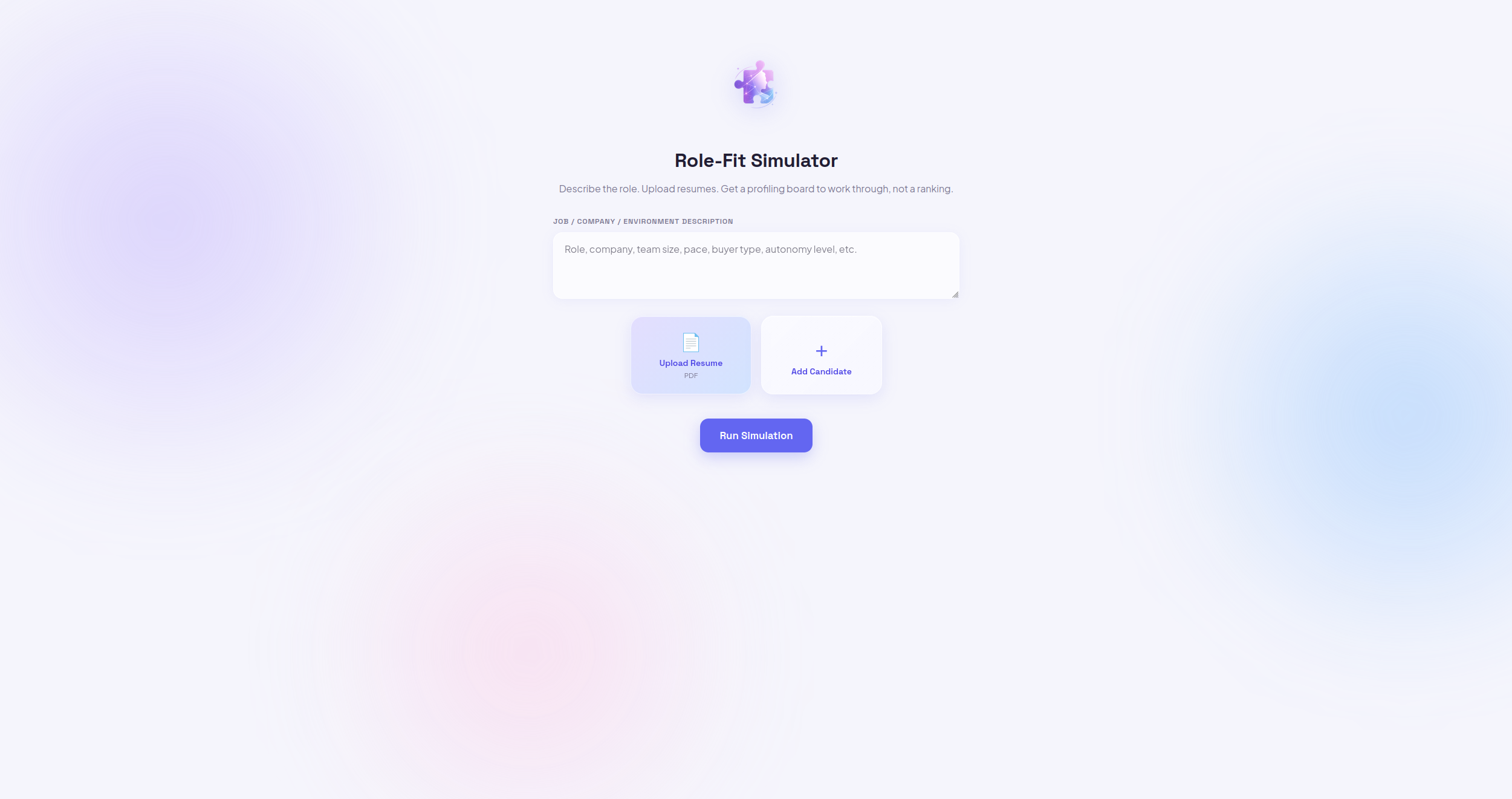
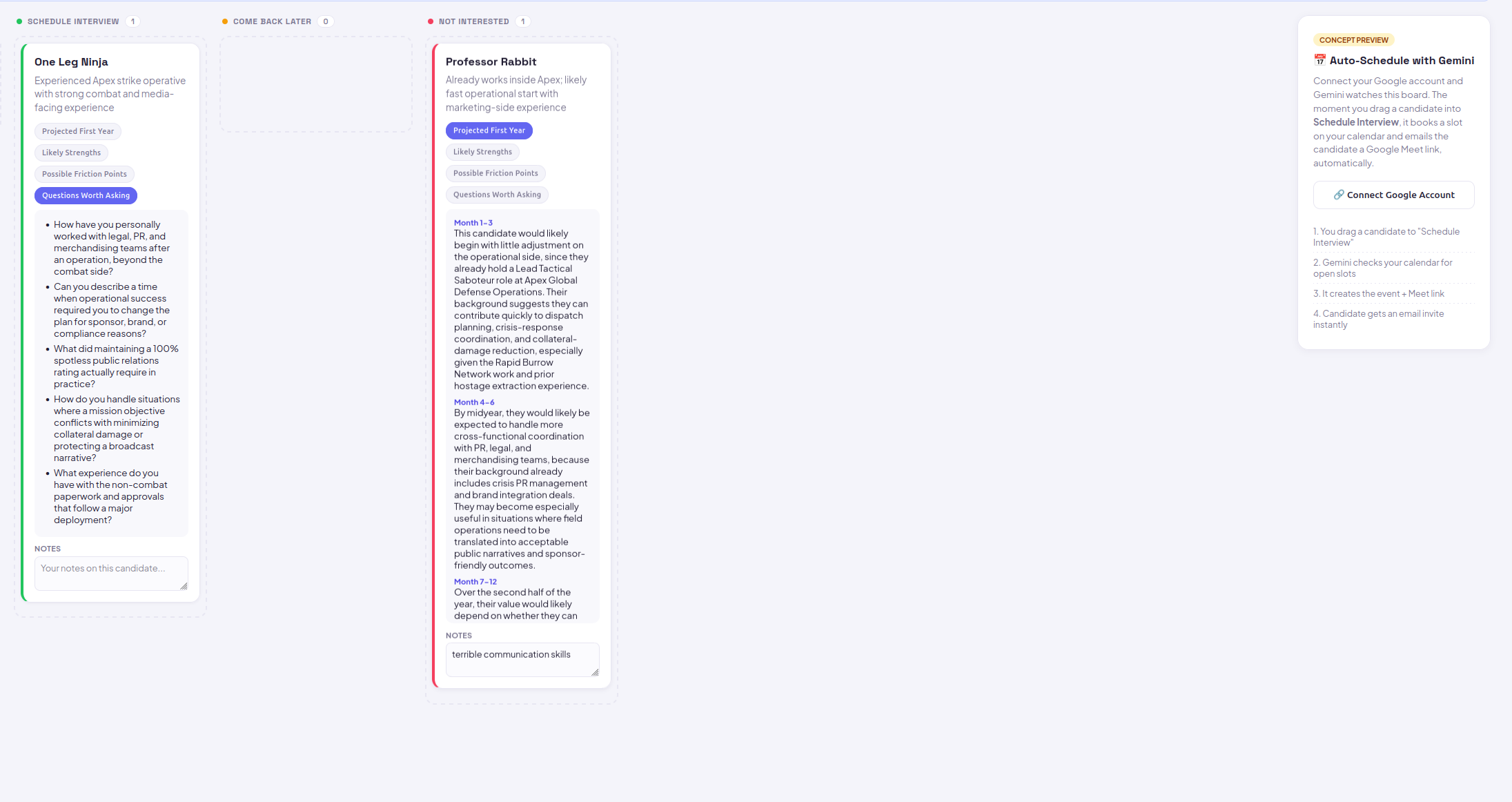
A tool that takes a job description and a stack of resumes and produces a grounded, quarter-by-quarter projection of how each candidate's first year might unfold, plus sharp interview questions, deliberately with no score and no ranking, just material to reason with.
Turns hiring from a leaderboard exercise into an actual profiling process, judgment support a manager can explain and defend later on.
Python, Flask, OpenAI API, PDF resume parsing.
Listing Photo Pipeline
Every rental listing needs photos that look professional, but editing raw phone photos by hand is slow, and it repeats for every unit, every listing, every week.
Manual editing in an external app cost real minutes per photo, time that scales directly with how many units are on the market at once.
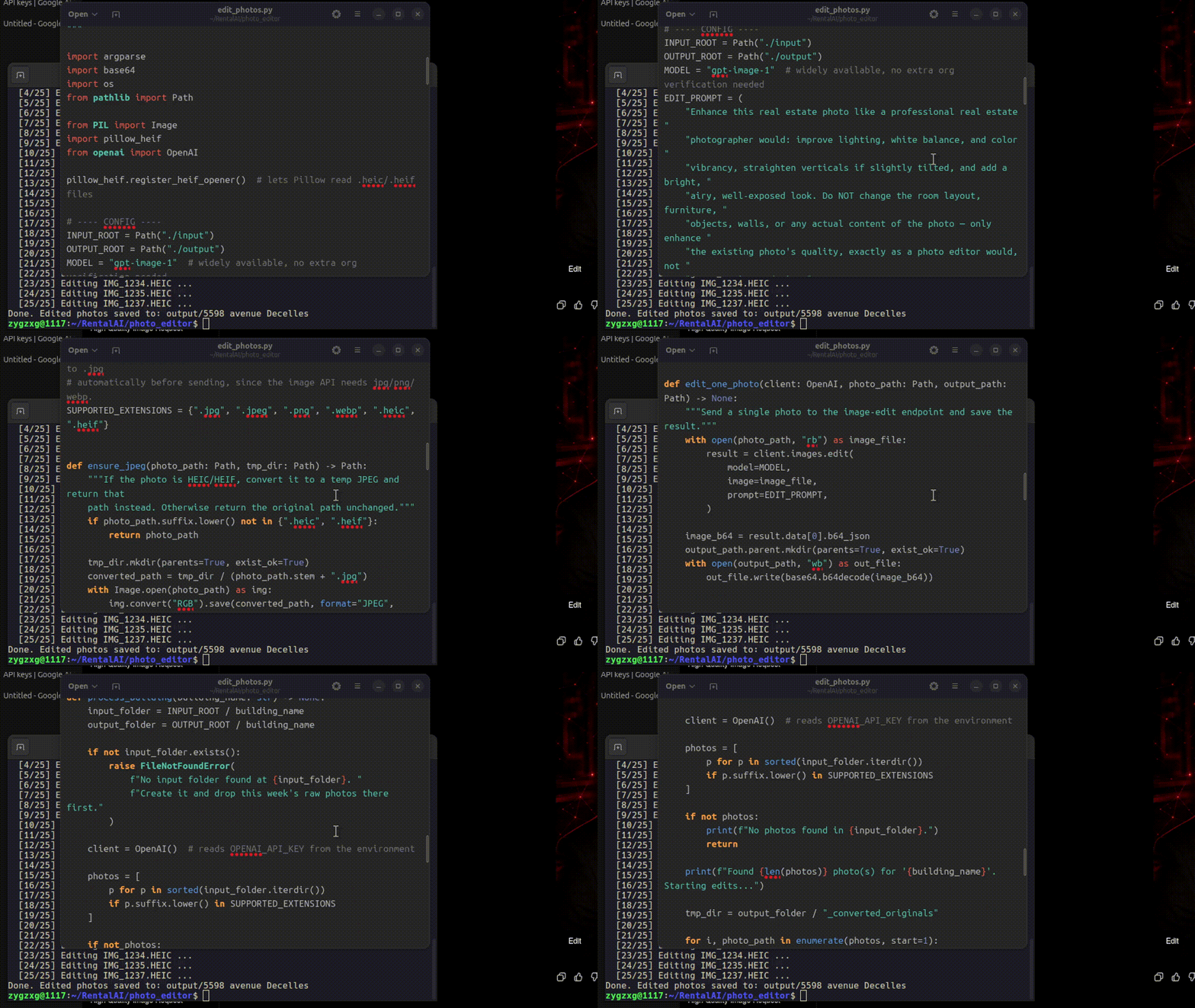
A script that runs each raw photo through an AI image model with a fixed editing instruction and returns a polished, listing-ready image automatically.
Editing time per photo drops from minutes to seconds, at roughly six cents a photo, the first AI system put into live, daily use at work.
Python, OpenAI's image API.


AskSQL
Answering a simple business question, "which units rent under $1,600," "how many deals has this agent closed", means opening a spreadsheet or a CRM and digging.
Structured business data is only useful to whoever already knows how to query it. Everyone else waits on that person, or guesses.
A tool that takes a plain-English question, writes the real SQL, runs it against the actual leasing database, and answers in plain English, always showing the underlying query so the answer stays checkable.
Anyone on the team gets a straight, verifiable answer from real data in seconds, without learning SQL or waiting on whoever normally runs the reports.
Python, OpenAI's API (or a fully local Ollama model), SQLite.
In Progress
Not yet built, still in research. Two directions currently being explored, shared here exactly as far as they've gotten.
Orizonz
Most analytics explain what already happened. Orizonz is built to reason about what's likely to happen next, tracing relationships across industries, economics, customer behavior, technology, and regulation that are hard to see from any single signal.
Example chains it's meant to surface: rising cotton prices → shrinking fast-fashion margins → more thrift shopping → renewed Y2K demand. Or: GPU shortages → rising cloud costs → more demand for local AI infrastructure. Or: hiring freezes → productivity pressure → faster workflow-automation adoption.
Sales forecasting is one application of this. The long-term aim is decision intelligence for an organization as a whole.
Samiel Business
An intelligent reasoning layer that sits across an organization's existing software, its CRM, documents, emails, dashboards, and internal knowledge, so employees get grounded answers instead of searching ten systems independently.
The aim is a system that understands how a specific organization actually functions, connecting its people, knowledge, and workflows into one coherent layer, an AI operating layer that treats an organization as a living system.
Samiel
A separate, quieter thread from Samiel Business, centered on presence rather than organizations: an AI meant to exist somewhere real, with a physical location you could actually go stand in front of.
Deliberately early and deliberately vague here. What it becomes, and what "visiting" it actually means, is still being worked out.